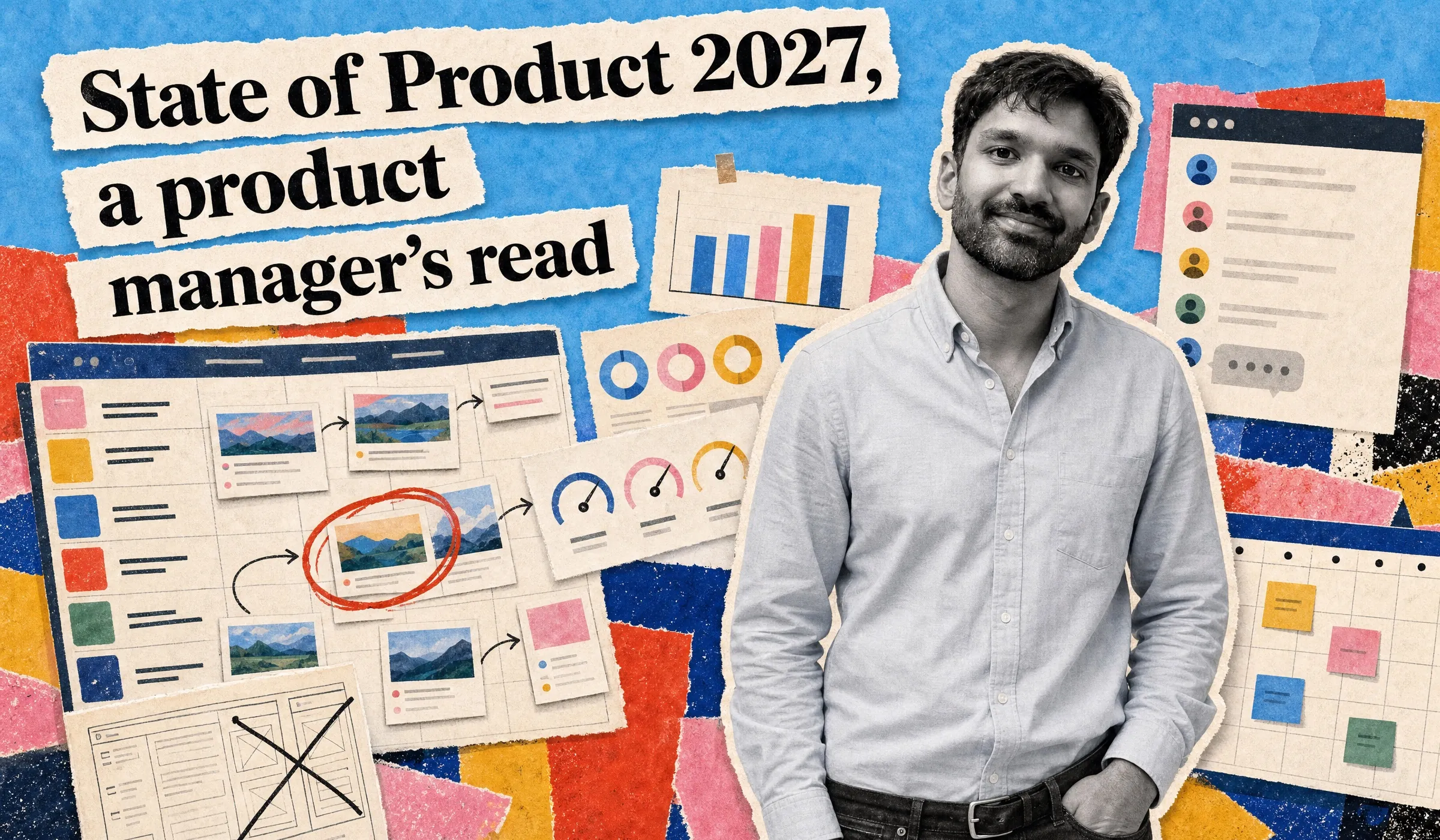
When we can build more, how do we decide what is worth building?
Building keeps getting cheaper. Choosing well doesn’t.
Read the transcript
- When we can build more, what is worth building?
- AI has increased our ability to build faster than our confidence about what deserves to be built.
- So we don’t start with a feature list. We start where customers get stuck.
- Not the newest idea. Not the loudest request in the room.
- One problem worth solving.
- We test a few ways to solve it, and watch what customers do.
- The goal isn’t building more things.
- The right thing.
- When an idea falls flat with customers, we let it go.
- We keep looking until one really works.
- The next shopper doesn’t stop to ask.
- They buy what they came for.
- So what’s worth building? The thing that solves the customer’s problem.
- Worth building.
AI has increased our ability to build faster than our confidence about what deserves to be built.
We can turn more ideas into working software. Choosing which ones deserve our time is still hard.
Limited engineering resources used to force trade-offs. Now that building is easier, more ideas pass the feasibility test with their most important assumptions still unresolved. And an idea can become more convincing simply because it exists. A polished interface and a smooth demo can feel like progress before we know whether anyone needs the product.
Building got easier. Choosing well did not.
Before spending more time building, I’d rethink
- Whose problem are we solving, and how do they handle it today?
- What evidence shows the problem matters?
- What’s the smallest experiment that could reduce our uncertainty?
- What result would make us change direction, or stop?
The opportunity is to use AI platforms to build and test more meaningful possibilities, and to get more comfortable letting go when the evidence is weak or an idea falls flat in user testing.
In every product review, I want to make three things clear:
- What we learned
- Which assumption changed
- Why the next investment of time, effort, or resources is justified
As building gets easier, how are we getting better at choosing?
Thank you to Claire Vo for her thought-provoking talk, “The Last Roadmap” (opens in a new tab), which prompted this reflection.